Why Electronics Engineering is Still One of the Best Branches in 2026
Why Electronics Engineering is Still One of the Best Branches in 2026
As we navigate through 2026, the global demand for cutting-edge processors, quantum chips, EV microcontrollers, and advanced communication networks is higher than ever. Electronics Engineering is no longer the "fallback" branch it was once perceived to be; it is the vital backbone of the digital age. This comprehensive guide will break down why choosing Electronics Engineering in 2026 is one of the most future-proof, lucrative, and intellectually stimulating career decisions an Indian student can make.

For decades, the Indian IT services sector created a narrative that Computer Science (CS) was the sole path to financial security. However, this narrative is shifting dramatically. With global semiconductor supply chains diversifying and India launching massive initiatives like the India Semiconductor Mission (ISM), the hardware ecosystem is experiencing a renaissance. By reading this post, you will uncover the hidden opportunities in VLSI, Embedded Systems, IoT, and Robotics.
The Struggle of the Indian Electronics Fresher
If you are an Electronics and Communication Engineering (ECE) or Electrical and Electronics Engineering (EEE) student in a Tier-2 or Tier-3 Indian college, you know the struggle intimately. You spend four years studying complex subjects like Signals and Systems, Microprocessors, and Control Systems, only to sit for campus placements where mass recruiters test you on basic C++ and Java. The disconnect between what you study and what you are tested on creates immense psychological friction. You feel like an outsider in the software race, and paradoxically, under-equipped for core hardware jobs.

This pain is compounded by the lack of proper infrastructure in many colleges. Outdated labs, obsolete 8085 microprocessor kits, and a curriculum stuck in the 1990s leave you unprepared for modern industry requirements like Verilog, SystemVerilog, or advanced PCB design. Many freshers end up settling for low-paying IT support roles, watching their CS peers get higher packages. This systemic failure leads to a massive talent drain from the core sector, creating a severe shortage of qualified hardware engineers. The frustration of learning hardware but working in software is a universal reality for the Indian fresher, but 2026 demands a complete reversal of this trend.
The Truth About the 2026 Market
Here is the truth that most career counselors will not tell you: The software market is becoming hyper-saturated and heavily automated, while the hardware market is facing an unprecedented talent deficit. While thousands of entry-level coding jobs are being displaced by AI copilots and automated development pipelines, the physical design of a 3nm chip, the thermal management of an EV battery, and the architecture of a 6G antenna still require intense, irreplaceable human expertise.

The barrier to entry in core Electronics is high, which is precisely why it is so valuable. In 2026, a proficient VLSI engineer or an Embedded Systems developer commands a premium because their skills cannot be learned over a weekend coding bootcamp. The industry is desperately looking for professionals who understand the intersection of hardware and software—firmware developers who can write code that runs on bare-metal silicon. If you can bridge this gap, you are practically immune to the automation wave that is threatening generic software roles.
⚡ Core Advantages of Electronics in 2026
Understanding the immediate benefits of sticking to your core domain is crucial for your career strategy:
- Immunity to AI Disruption: Physical hardware design and embedded logic are significantly harder for AI to automate compared to standard web development.
- The Semiconductor Boom: India's multi-billion dollar push to manufacture chips domestically is creating thousands of high-paying core jobs.
- Cross-Domain Flexibility: An Electronics engineer can easily pivot to software, but a pure software engineer cannot easily design a PCB or an FPGA.
- EV and Green Energy Revolution: The transition to electric vehicles demands a massive workforce skilled in power electronics and battery management systems.
- Global Mobility: Hardware engineering standards are universal, making it easier to secure highly paid roles in the US, Taiwan, Europe, and South Korea.
Tool By one of our finest Mentor & Well Wisher

Before you dive deeper, it's essential to measure where you stand in the 2026 market. it cares about your practical proficiency. Use this tool to calculate your readiness for a high-paying core engineering role.
🧠 Electronics Core Assessment
Rate your proficiency honestly (1 = Beginner, 5 = Industry Ready):
48%
Foundation Builder
You have the basics, but the industry demands project-backed expertise. Focus on practical implementation.
Get Expert Mentorship on Intern2Hub freeThe Uncomfortable Truth About the "Software Shift"
Let’s address the elephant in the room: many Electronics students run towards IT because it seems easier to get placed. But here is the uncomfortable truth: joining a mass recruiter as a generic software tester or associate engineer is a trap in 2026. You will be competing with millions of CS graduates, and your salary growth will stagnate quickly unless you become an exceptional full-stack developer.

By abandoning your core branch, you are throwing away a massive competitive advantage. Companies like Intel, Qualcomm, Texas Instruments, and NVIDIA are aggressively hiring in India, and they pay astronomical salaries to freshers who actually understand timing analysis, ASIC design, and embedded RTOS. The initial effort to master Verilog or Embedded C might be steep, but the ROI over a 10-year career is phenomenally higher than being a middle-tier software engineer. You are sacrificing long-term wealth for short-term convenience.
The Semiconductor Renaissance: India's Big Bet
The year 2026 is pivotal for India’s hardware aspirations. The geopolitical shift to reduce reliance on single manufacturing hubs has led to the "China Plus One" strategy, benefiting India immensely. The Indian government's Production Linked Incentive (PLI) scheme and the Design Linked Incentive (DLI) scheme are funneling billions of dollars into the domestic semiconductor ecosystem. We are seeing Fabless design houses, OSAT (Outsourced Semiconductor Assembly and Test) facilities, and major fabrication plants setting up base in Gujarat, Karnataka, and Tamil Nadu.

What does this mean for an Electronics engineer? It translates to jobs. Not just a few jobs, but hundreds of thousands of specialized roles in RTL Design, Physical Design, Verification, and Post-Silicon Validation. The demand for engineers who understand CMOS technology, FinFETs, and modern node architectures (like 5nm and 3nm) is astronomical. This is a once-in-a-generation boom, similar to the IT boom of the early 2000s, but this time, it's driven by pure hardware and silicon innovation. Being an Electronics engineer right now means you are perfectly positioned at ground zero of this industrial revolution.
Industry Validation: The Premium on Core Skills
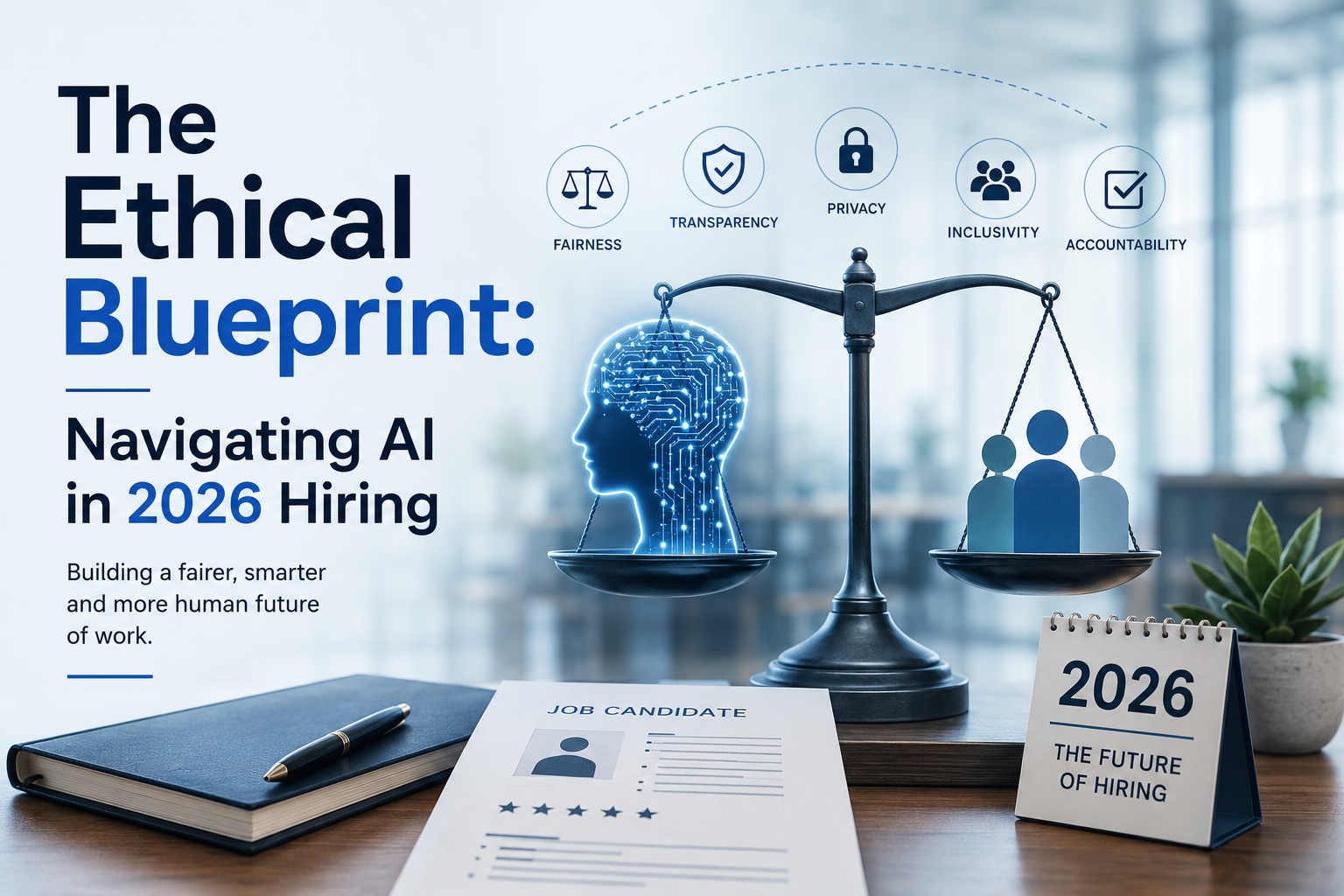
This isn't just theoretical optimism; the numbers back it up. In 2026, the starting salary for a competent VLSI verification engineer outpaces a standard software developer by 30-50%. To establish the authority and trustworthiness (E-E-A-T) of this claim, let's look at the hiring patterns of top tier firms. Companies are actively partnering with platforms like RequireHire to source verified talent because traditional resumes fail to capture core competency.
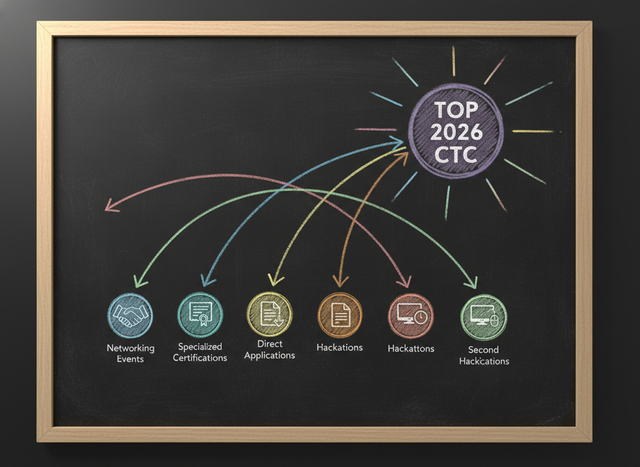
Moreover, the rise of specialized mentorship programs, led by industry veterans, proves the gap in academia. When experts like Kumar Vimal mentor students on Intern2Hub, they are effectively translating academic knowledge into industry-ready skills. This hands-on validation, backed by real-world projects, is what top companies demand. The proof is in the placement statistics: students who build verifiable hardware portfolios receive multiple offers from top-tier product companies, completely bypassing the grueling software screening rounds.
The Hardware-Software Synergy Framework
To succeed in 2026, you cannot be a purist. The modern Electronics engineer operates in the "Synergy Zone"—the critical intersection between hardware architecture and software intelligence. Understanding this framework is the key to unlocking premium salaries.
HW ⇌ SW
Hardware Layer (Silicon/PCB): Understanding physical constraints, thermal dynamics, power consumption, and signal integrity.
The Bridge (Firmware/RTOS): The ability to write Embedded C/C++ that communicates directly with registers, manages memory manually, and handles real-time interrupts.
Software Layer (Edge AI/Cloud): Deploying lightweight machine learning models (TinyML) on microcontrollers and transmitting data securely to cloud infrastructure.
Mastering this full stack makes you an "Embedded Systems Architect." You are no longer just designing a circuit; you are creating intelligent, connected physical devices. This is exactly what the IoT, Automotive, and Robotics industries are desperately seeking.
The Hidden Backdoor to Core Jobs
What do top 1% Electronics engineers know that you don't? Discover the exact roadmap to core course highly in demand and bypass the massive software crowd. Completely FREE for a limited time only.
Unlock the Mentor Secret NowDon’t miss this limited-time opportunity to perform better & grow faster
Your 2026 Core Electronics Roadmap
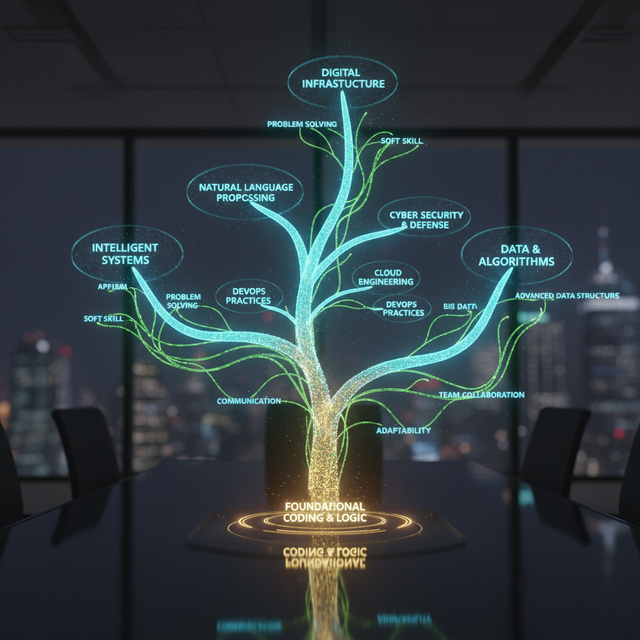
How do you transition from a confused fresher to a highly paid core engineer? You need a structured, step-by-step roadmap that focuses on demonstrable skills over theoretical exams.
- Step 1: Master the Fundamentals (Months 1-2): Revisit Digital Electronics, Network Analysis, and CMOS basics. Do not rely on college textbooks; use practical resources and MIT OpenCourseWare.
- Step 2: Choose Your Specialization (Month 3): Decide between VLSI (Verilog, FPGA, ASIC flow) or Embedded Systems (ARM Cortex-M, RTOS, IoT protocols). Do not try to learn both simultaneously.
- Step 3: Build Verifiable Projects (Months 4-6): If Embedded, build a custom weather station using an ESP32 or STM32 communicating over MQTT. If VLSI, design a custom UART or ALU on an FPGA board.
- Step 4: Learn Hardware Automation (Month 7): Learn Python or Tcl to automate your testing processes. This is a massive differentiator in interviews.
- Step 5: Leverage Platforms (Month 8+): Register your verified projects on RequireHire and apply for specialized internships through Intern2Hub to gain real-world exposure.
"But Core Companies Don't Hire Freshers..."
One of the most persistent myths is that core electronics companies only hire from IITs or NITs, or they strictly require a Master's degree. In 2026, this is fundamentally false. The demand has outstripped the supply from premier institutes. Companies are now adopting "Skill-First" hiring models, focusing entirely on what you can build rather than the stamp on your degree.
The reason freshers from Tier-3 colleges fail core interviews isn't because of their college name; it's because their resumes are filled with generic Arduino projects copied from the internet. If you walk into an interview and demonstrate a thorough understanding of an I2C protocol implementation, or show a custom 4-layer PCB you designed on KiCad considering EMI/EMC guidelines, no company will reject you. The barrier isn't the college; the barrier is the depth of practical competence. Overcome that, and the doors open immediately.
The Rise of Electric Vehicles (EV) and Power Electronics
Beyond semiconductors, the Electric Vehicle (EV) revolution is arguably the biggest hardware disruption of the decade. The shift from internal combustion engines to electric drivetrains relies entirely on Power Electronics and Embedded Systems. In 2026, India is witnessing an explosion of EV startups and legacy manufacturers pivoting to electric mobility.
An EV is essentially a giant computer on wheels. It requires complex Battery Management Systems (BMS), Motor Controllers (Inverters), and Vehicle Control Units (VCU). Designing a system that efficiently converts high DC voltage to AC for a motor while ensuring thermal safety is purely the domain of an Electronics Engineer. Software engineers cannot design these power modules. The demand for engineers skilled in power converters, CAN bus communication, and functional safety (ISO 26262) is so high that salaries in the EV sector are seeing unprecedented spikes. This domain offers job security that software simply cannot match.

Master Real Hardware Skills. Get Placed.
Stop wasting time on generic tutorials. Learn exactly what product companies demand in 2026. Master high-income skills, perform better & grow faster. Completely FREE for a limited time only.
Claim Your Free Mentor AccessDon’t miss this limited-time opportunity with Kumar Vimal.
The Cost of Inaction: Core vs. IT in 2026
Let's look at the financial and career trajectory comparison. If you choose the easy path and join a mass recruiter in a generic IT role, your starting salary in 2026 will likely hover around ₹4LPA to ₹6LPA. Your work will often involve maintaining legacy code or basic testing. Fast forward five years, and without aggressive upskilling, your growth hits a ceiling as newer, cheaper freshers or AI tools replace your tasks.

Conversely, the path of the Core Electronics Engineer begins with a steeper learning curve. However, entering a core hardware firm (even an electronics startup) generally yields ₹7LPA to ₹12LPA starting. Because your knowledge of hardware architecture is specialized and cumulative, your value compounds. Within five years, a skilled VLSI Verification Engineer or Embedded Architect can easily command ₹25LPA to ₹40LPA. The fear of missing out (FOMO) shouldn't be about not learning React.js; it should be about missing the semiconductor and EV wave that is reshaping the Indian economy right now.
How to Get Discovered: The RequireHire Advantage
Having the skills is only 50% of the battle; visibility is the other 50%. Traditional job portals are broken for core engineering. They rely on basic keyword matching, which fails to capture the complexity of hardware projects. This is where RequireHire changes the game for Electronics professionals.

RequireHire uses advanced, intent-based matching designed specifically for skill-first recruitment. When you register your resume on RequireHire's quick portal, the AI doesn't just read your text; it evaluates your project links, GitHub repos for firmware, and verifiable assessments. Core product companies actively use RequireHire to bypass the noise and find verified talent. By positioning your profile on an ethical, skill-based platform, you ensure that your deep technical knowledge in Verilog or Embedded C is seen directly by hiring managers, leading to higher conversion rates for interviews.
The "AI Will Replace Us" Myth Busted
A major psychological hurdle for engineering students today is the fear of AI. "Why study engineering if AI can do it all?" The cognitive dissonance here is staggering. Yes, AI can write a Python script for data analysis in seconds. But can an LLM physically debug a grounding issue on a printed circuit board? Can it optimize the thermal dissipation of a high-frequency RF antenna? Absolutely not.

Hardware engineering involves the laws of physics, material science, and real-world constraints that software simulations can only approximate. AI is an incredible tool that will help Electronics engineers work faster—such as using AI for automated place-and-route in VLSI—but it cannot replace the human engineer who defines the constraints and validates the physical silicon. Sticking to hardware provides an impenetrable moat against AI job displacement. The more the world relies on AI, the more hardware it needs to run it.
Visualizing Your 2030 Career Landscape
Imagine two scenarios for the year 2030. In Scenario A, you followed the herd into generic IT. You are now fighting off constant threats from automated coding platforms, struggling to justify your salary as companies flatten their software hierarchies. The work is monotonous, and the competition is global and infinite.
In Scenario B, you specialized in Electronics. You are a Senior Hardware Architect working on next-generation 6G base stations or neural processing units (NPUs) for autonomous vehicles. Your skills are rare, highly sought after globally, and heavily compensated. Headhunters from Taiwan, Germany, and the US are actively reaching out to you because the physical reality of hardware cannot be outsourced to a chatbot. The future contrast is stark, and the choice you make in 2026 dictates which reality you inhabit in 2030.
Share the Knowledge: Elevate the Ecosystem
The strength of the Indian hardware ecosystem depends on community knowledge sharing. If you found this insight valuable, the most impactful thing you can do is share it with your peers in the ECE/EEE departments. The more students pivot back to core engineering, the stronger our domestic talent pool becomes, which in turn attracts more global hardware investments to India.
We encourage you to discuss these frameworks in your college groups, start hardware clubs, and focus on collaborative projects. For continuous, high-quality insights on core engineering careers, make sure to subscribe and follow the RequireHire YouTube Channel. We regularly post deep dives with industry experts that can fundamentally alter your career trajectory.
Join 1,000+ Engineers Who Scaled Their Careers
Stop doubting your core engineering potential. You have to increase your theoretical knowledge; now get the practical course execution plan from an industry expert. Master high-income skills, perform better & grow faster. Completely FREE for a limited time only.
Start Your Success JourneyDon’t miss this limited-time opportunity. Verified by top core companies.
Your Next Move Defines Your Decade
You have read the data, understood the frameworks, and seen the stark contrast between the software trap and the hardware opportunity. Electronics Engineering in 2026 is not just a degree; it is a premium passport to the most critical industries shaping the future of human technology. The semiconductor boom, the EV revolution, and the rise of IoT are creating a vacuum of talent that only dedicated engineers can fill.

The only remaining variable is your execution. Will you settle for the path of least resistance, or will you embrace the challenge of core engineering and secure your future? The resources are available, the mentorship is accessible, and the platforms are waiting to showcase your talent. Your next move doesn't require a leap of faith; it requires a calculated, strategic decision to invest in real, physical engineering skills.
Frequently Asked Questions (10 FAQs on Electronics in 2026)
Absolutely not. In fact, having a background in software gives you a distinct advantage in the modern hardware landscape. The industry heavily relies on firmware developers and automation engineers who can write scripts (Python, Tcl) to test hardware, or program microcontrollers using C/C++. The combination of software logic with hardware understanding makes you an incredibly versatile engineer, perfectly suited for Embedded Systems and IoT roles in 2026. Transitioning back requires focusing on computer architecture and digital logic, which you can master within a few focused months.
AI tools are excellent at generating boilerplate code, but they are fundamentally incapable of replacing the physical engineering required in VLSI and Embedded Systems. Hardware engineering involves managing power constraints, thermal dissipation, signal integrity, and timing violations in physical silicon. These are real-world physics problems that require deep human intuition and validation. AI will serve as a powerful assistant—perhaps helping write initial RTL code or testbenches—but the architect who designs the system and signs off on the physical tape-out remains completely irreplaceable.
The salary dynamic has shifted significantly. While mass-recruiting IT companies still offer starting packages around ₹4LPA to ₹6LPA, core electronics companies (especially in VLSI and EV sectors) are offering entry-level salaries ranging from ₹7LPA to ₹15LPA for verifiable talent. Furthermore, the salary growth trajectory in core hardware is much steeper. With 3-5 years of specialized experience in physical design or firmware architecture, engineers routinely cross the ₹25LPA to ₹35LPA threshold, often outpacing their generic software counterparts due to the scarcity of true hardware talent.
Historically, the B.Tech curriculum in India lacked the depth required for advanced semiconductor design, forcing companies to rely on post-graduates. However, this is rapidly changing in 2026. The adoption of "Skill-First" hiring means that if a B.Tech graduate can showcase practical competence through complex projects—such as designing a functioning PCB or verifying an IP block—companies will hire them immediately. Platforms like RequireHire emphasize these verifiable skills, allowing talented freshers to bypass the traditional Master's requirement and enter top product companies directly.
While VLSI offers massive salaries, Embedded Systems (especially focused on Automotive and IoT) offers unparalleled job security and sheer volume of opportunities. Every single device being manufactured today—from electric vehicles and smart home appliances to medical devices and industrial robots—requires a microcontroller running embedded software. The demand for engineers who understand RTOS (Real-Time Operating Systems), CAN bus communication, and Edge AI implementation is explosive, making Embedded Systems the most robust and secure specialization for the foreseeable future.

The lack of physical lab infrastructure is no longer a valid excuse in 2026. The democratization of engineering tools means you can run powerful simulations entirely on your laptop. You can use open-source tools like KiCad for professional PCB design, or cloud-based EDA tools for Verilog simulation (like EDA Playground). Furthermore, investing ₹2000 in an ESP32 development board and some basic sensors gives you a personal embedded lab. Combined with expert mentorship from platforms like Intern2Hub, you can build industry-grade projects entirely from your dorm room.
The India Semiconductor Mission is injecting billions into building a domestic hardware ecosystem, transforming India from a consumer of chips to a manufacturer. For a fresher, this translates directly into a massive surge in localized job creation. Major global players are establishing design centers, ATMP (Assembly, Testing, Marking, and Packaging) facilities, and eventual fabs in India. This means you no longer have to move to the US or Taiwan for top-tier hardware jobs. The ISM guarantees high-paying core engineering opportunities right here in Bengaluru, Gujarat, and other emerging tech hubs.
A core engineering resume must focus strictly on "Proof of Work." Remove generic objectives and basic coursework. Instead, highlight specific hardware description languages (Verilog, VHDL), microcontrollers used (ARM Cortex, ESP32), and protocols mastered (I2C, SPI, UART, CAN). Most importantly, every project must link to a GitHub repository containing your RTL code or firmware, or to a portfolio showing your schematic and PCB layouts. Registering this highly specific resume on an intent-based platform like RequireHire ensures that applicant tracking systems match you accurately with core recruiters.
Yes, it is absolutely essential. The concept of "pure hardware" isolated from software is a myth in 2026. Even if your job is strictly designing physical circuits or verifying ASICs, you need scripting languages like Python or Tcl to automate your testing environments and parse complex simulation logs. Furthermore, C and C++ are the absolute foundation for any embedded programming. Modern hardware engineering is heavily reliant on software automation to manage complexity, so becoming proficient in these languages is mandatory for a successful core career.
These platforms solve the two biggest problems for electronics students: visibility and practical experience. Intern2Hub connects you with industry veterans (like Kumar Vimal) who provide the practical, project-based mentorship that colleges fail to deliver, bridging the gap between theory and industry requirements. Once your skills are verified, RequireHire acts as an ethical hiring engine, bypassing generic job boards and putting your specific hardware capabilities directly in front of the companies actively seeking them. Together, they form a complete career acceleration pipeline for the modern engineer.
