Top 10 High-Paying Jobs in India That Don't Require Coding (2027 Guide)
Top 10 High-Paying Jobs in India That Don't Require Coding (2027 Guide)
Strong careers are built on skills people value, and code is only one of them.
This guide explains ten roles that can offer strong earning potential without coding, how to choose between them, and how requirehire.com helps you build a skill-scored profile that employers can discover.
A note before you read
This guide is published by RequireHire's content team for students, freshers, career switchers and working professionals who want a rewarding career that does not depend on coding. Last updated November 2026. Pay varies widely by employer, city, skill and seniority, so this guide quotes no salary figures, ranks no role above another and offers no guarantees. Use it as a starting point and check current listings and official information before deciding. To be clear about scope, requirehire.com is India's interview-first hiring platform with structured AI interviews, skill scores, mock interviews, aptitude practice and a resume check.
Why Do So Many People Believe High Pay Needs Coding?
Many people in India grow up hearing one message about pay: learn to code or settle for less. The message is easy to repeat because software careers have been highly visible and often well rewarded. It leaves out everyone whose strengths lie in talking to customers, organising work, reading numbers or understanding people.
The reality is wider. Every organisation, whether it sells software, food, finance or healthcare, needs people who plan, analyse, sell, design, hire and look after customers. Those roles often involve everyday tools such as spreadsheets and dashboards, but they do not require writing programs. Pay in them depends on the employer, the city, the level of responsibility and the results you deliver.
Another source of confusion is the phrase high-paying. It usually describes where a career can go over time, not what an entry-level role offers on the first day.
A more useful question is this: which non-coding role fits my strengths, and what proof of skill would make an employer confident in me?
The gap this creates
Many people either force themselves into coding they do not enjoy, or drift without a direction. Closing that gap means choosing a role that suits your strengths, building proof of skill and making that proof easy for employers to find.
The Short Answer: Yes, Many Roles Can Pay Well Without Coding, If Your Skills Match
Product manager, business analyst, digital marketing manager, sales and business development manager, financial analyst, HR and talent acquisition manager, operations and supply chain manager, UX/UI designer, project manager and customer success manager are roles that can offer strong earning potential without coding.
A structured AI interview scores technical ability, communication and problem-solving, so you can see how ready you are and what to practise next.
The rest of this guide shows how to choose among them and prepare, and where requirehire.com fits in.

What Is Actually Making This Career Choice So Confusing?
The coding-or-nothing message
Repeated advice makes non-coding paths look like second choices, even when they suit your strengths better.
Unclear role names
Job titles are confusing. Two roles with similar names can involve very different work, so a title alone tells you little.
Pay claims without context
Headline numbers rarely explain the employer, city, level or years behind them, which makes comparison misleading.
No proof for people skills
Communication and judgment are hard to show on a resume, so strong candidates can look the same as everyone else.
Debate this
Is a high-paying career defined by the role, the skills or the employer? Would you accept a slower start for a better fit, or take the fastest offer and adjust later?
Fix 1: How Do You Choose the Right Non-Coding Role for Your Strengths?
Start with yourself, not with the salary. Write down what you do best and enjoy most. Are you strongest with people, numbers, words, visuals or organisation?
Next, match strengths to roles. Someone who enjoys persuading and building relationships may look at sales or customer success. Someone who likes patterns and accuracy may prefer analysis or finance. Someone who enjoys arranging people and deadlines may suit project or operations work.
Then gather real information. Read several current listings for each role and note the tools, responsibilities and entry requirements. Speak to one or two people who do the job and ask what a normal week looks like. Finally, judge each role with four questions: does it match my strengths, can I show proof of those strengths, is the route to it realistic for me, and would I be glad to do this work for years?
Try this week
Write your top three strengths, shortlist two roles from the list in this guide and read five current listings for each.
Fix 2 and 3: How Do You Build the Skills and Prove You Have Them?
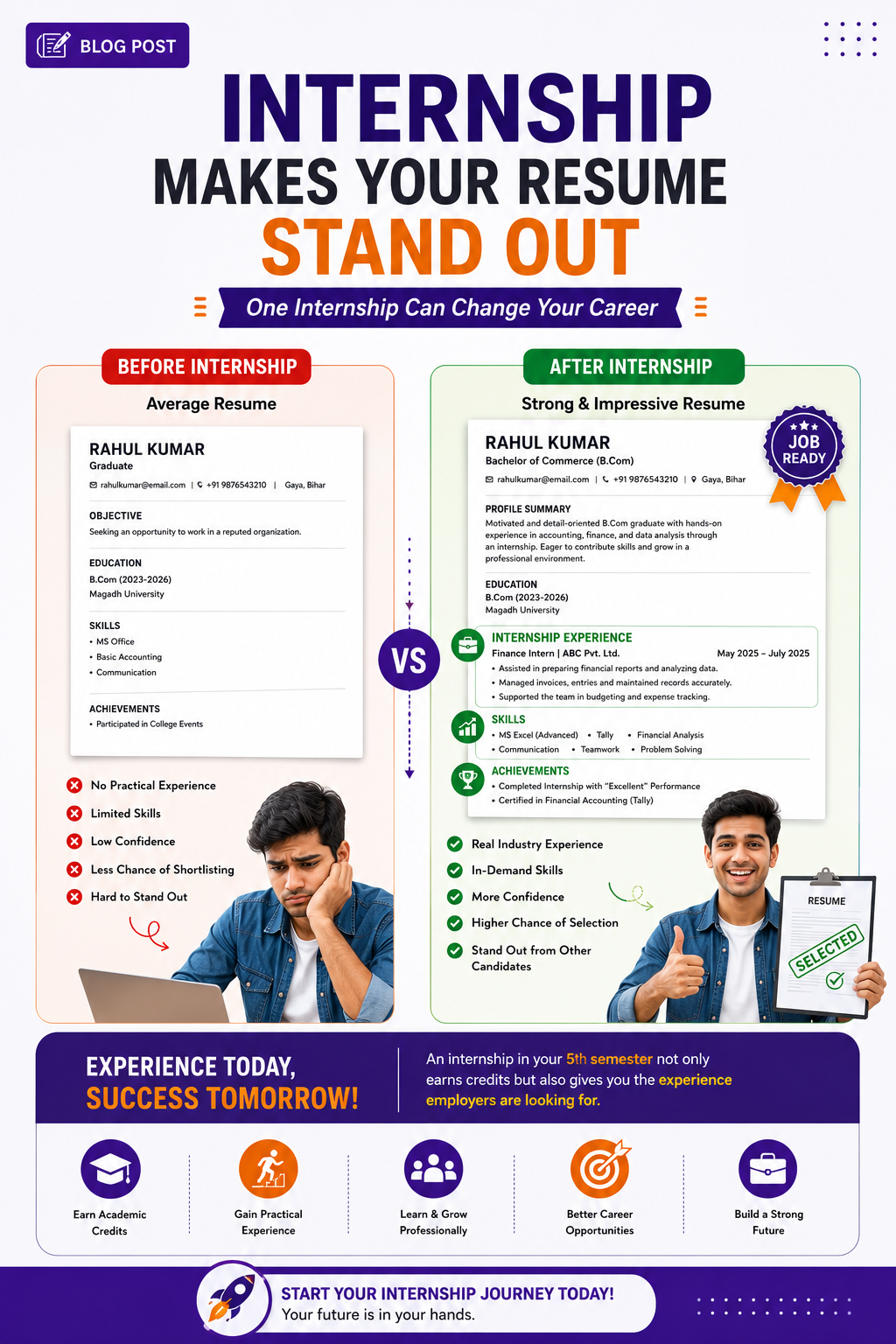
Build skills through small samples of real work. A future analyst can study a simple data set in a spreadsheet and write a one-page summary. A future marketer can plan a small campaign for a local business. A future product manager can write a short plan for improving an app they use. Each sample shows how you think.
Then add proof. On requirehire.com, you can warm up with mock interviews and aptitude practice, then take a structured AI interview that evaluates technical ability, communication and problem-solving and produces a skill score. It is a starting point, not a verdict, and it shows what to practise next.
Make the proof discoverable. Employers browsing the ranked pool see an anonymised profile, and your contact details are shared only if you approve a request. That means your preparation can be noticed while you continue to study, practise and apply.
The combined effect
A role matched to your strengths, small samples of real work and a measured score. Together they turn a vague wish for a better-paid career into a plan you can follow.
Your First AI Interview Takes Minutes. The Clarity Lasts Much Longer.
Register on requirehire.com, upload your resume and take a structured AI interview to see your baseline skill score today.
to register, and it takes just a few minutes to start.
Take My First AI InterviewTool Skills vs Business and People Skills: What Drives Pay in Non-Coding Roles?
Tool skills
Spreadsheets, analytics dashboards, design software and planning tools help you work faster and show competence. They are often expected, but they can be learned by many people.
Business and people skills
Communication, negotiation, judgment and the ability to bring a team along are harder to copy. Roles that carry more responsibility tend to reward them heavily.
The honest verdict
You need both: tools to do the work and people skills to grow in it. If you had to improve only one this year, which would change your career more?
Chasing a Job Title vs Matching Your Strengths: Which Leads to Better Growth?
Chasing a title
Picking a role because it sounds impressive can lead to work you dislike, slow progress and early burnout.
Matching strengths
Choosing a role where your natural abilities help you improve faster, which tends to build confidence and results over time. A skill score helps you see where your strengths lie.
The honest verdict
Fit usually beats prestige in the long run, though status matters to many people. Would you rather hold a respected title you find tiring, or a modest one you enjoy?
Stop Guessing Where You Fit. See Your Strengths Scored.
A structured AI interview evaluates technical ability, communication and problem-solving, so you know what to practise next.
See How Scoring Works
Collecting Certificates vs Demonstrating Skill: Which Convinces Employers?
Collecting certificates
Courses can teach useful things and show commitment, but a long list does not prove you can apply what you learned.
Demonstrating skill
A finished sample, a clear explanation and a score from realistic practice show what you can do. Practice is self-paced on requirehire.com, so there is nothing to book.
The honest verdict
Learning matters, and proof matters more. Should employers value certificates or demonstrated work? People disagree, so prepare for both.
A Hidden Profile vs a Visible, Skill-Scored Profile: Which Gets Noticed?
Hidden profile
A resume sent to one inbox is seen by one reader. Your preparation stays private, and opportunities depend on where you happened to apply.
Visible, skill-scored profile
A profile that employers browsing a ranked pool can find, with contact details shared only after you approve.
The honest verdict
Visibility and privacy can go together. Would you trust a score more than a claim on a resume, or the other way round?

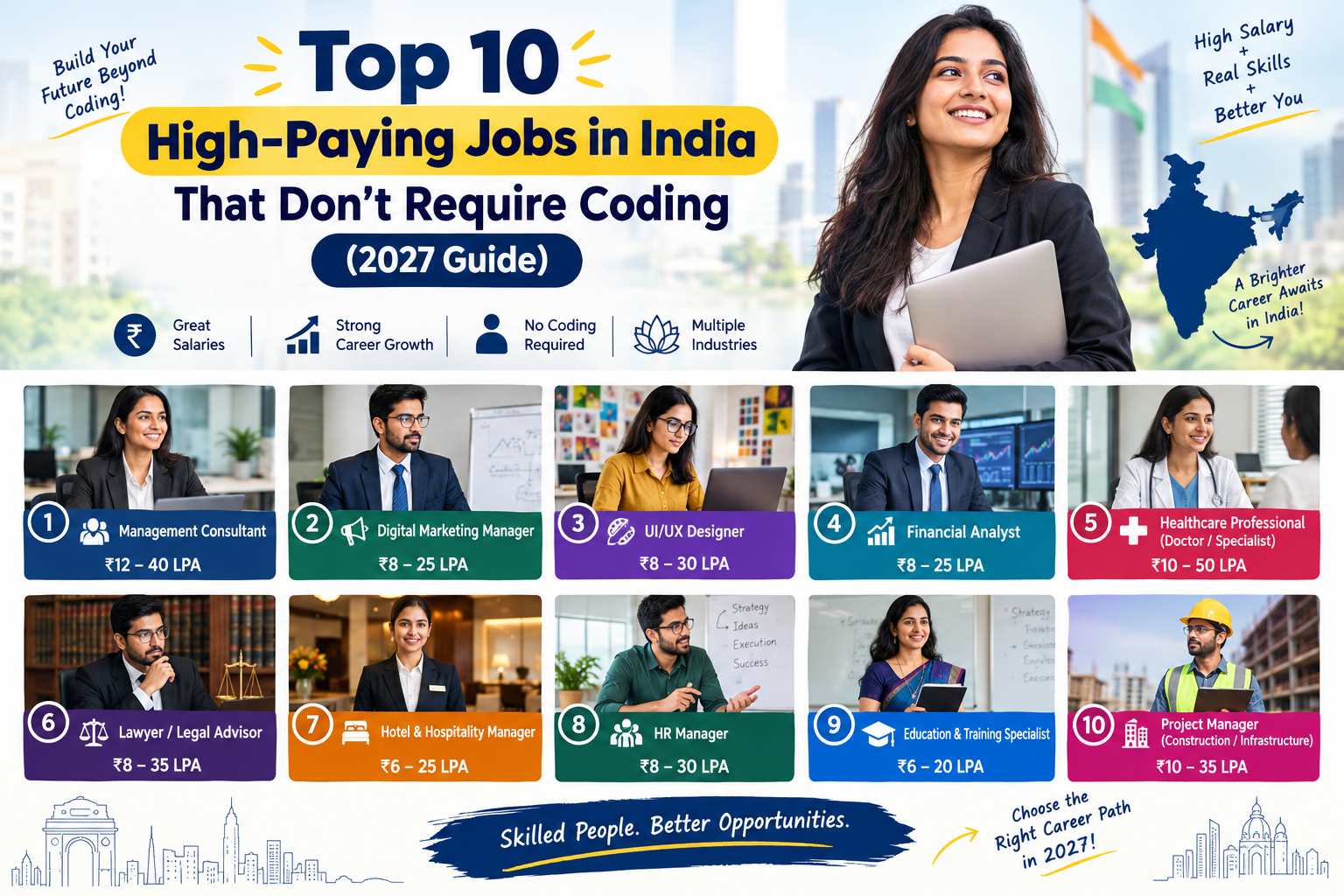
The Top 10 High-Paying Roles in India That Don't Require Coding
Product Manager
Decides what a product should do and why, working between customers, designers and engineers. Rewards structured thinking, prioritisation and clear communication.
Business Analyst
Studies how a business works, spots problems and recommends fixes using spreadsheets and dashboards. Rewards curiosity, analysis and clear documentation.
Digital Marketing Manager
Plans campaigns, content and audience growth using ready-made tools instead of code. Rewards creativity, writing and measuring what works.
Sales and Business Development Manager
Builds client relationships and wins new business. Rewards communication, negotiation and resilience, and pay is often linked to results.
Financial Analyst
Reviews budgets, performance and investments to guide decisions. Rewards numeracy, accuracy and sound judgment, with spreadsheets at the centre.
HR and Talent Acquisition Manager
Hires, develops and supports people. Rewards empathy, fairness and strong interviewing skill.
Operations and Supply Chain Manager
Keeps processes, vendors and deliveries running smoothly. Rewards planning, problem-solving and coordination.
UX/UI Designer
Designs how products look and feel for users, using visual design tools. Rewards empathy, visual thinking and testing ideas with real users.
Project Manager
Plans, schedules and delivers work across teams. Rewards organisation, leadership and the habit of spotting risks early.
Customer Success Manager
Helps clients get lasting value from a product. Rewards listening, problem-solving and relationship-building.
This list is not a ranking. Pay and entry requirements differ by employer, city and seniority, and some roles need prior experience, so check current listings before you decide.
What RequireHire Gives You to Prepare for Your Chosen Role
Structured AI interview scoring: your answers are evaluated for technical ability, communication and problem-solving, so you can see exactly where to improve.
Mock interviews and aptitude practice: rehearse answering questions aloud and test your reasoning, without a separate cost.
One-time profile and resume check: build your profile from a single resume upload, then use the resume check to present your education, skills and samples of work clearly.
A visible, skill-scored profile: employers browsing a ranked pool can discover you for the kind of role you are preparing for.
Consent-based privacy: employers see an anonymised profile, and your contact details are shared only after you approve.
Prepare Today. Be Discoverable Tomorrow.
Employers browse ranked candidate pools on requirehire.com. Your skill-scored profile can be there, with contact details shared only after you approve.
Register on RequireHire
Which Mistakes Do Candidates Make When Aiming for High-Paying Roles?
Chasing pay figures alone
A big number without context tells you little. Look at the work, the growth path and whether you would enjoy it.
Ignoring the everyday tools
Non-coding does not mean no tools. Spreadsheets, presentations and basic analytics are often expected, so practise them.
Sending the same resume everywhere
Each role values different evidence. Adjust your resume so your samples and skills match the listing.
Treating a score or a rejection as a verdict
A score is a starting point and a rejection is information, not a judgement of you. Use both to choose what to practise next, and ignore anyone who promises guaranteed jobs.
The "Non-Coding Jobs Pay Less" Myth
It is a common belief: if you do not code, your earning ceiling is low. The belief is understandable, because software roles have been highly visible.
What this misses
Pay is shaped by the role, the employer, the city, your skills, your responsibility and the results you deliver. Many non-coding roles carry real responsibility for revenue, customers, budgets or teams, and they are often rewarded accordingly. That does not mean every such role pays well or that coding roles are a poor choice. It means the label alone is not the answer, so compare real listings and choose with care. Hiring and selection decisions always belong to the organisations that make them.
What Actually Changes When You Choose a Role With Evidence?
Imagine two candidates who both want a better-paid career without coding. The first reads headlines, applies to everything and hopes. The second lists strengths, shortlists two roles, builds a small sample of work, practises interviews weekly and checks a skill score. After a few months, the second candidate knows what to improve, speaks more clearly and applies with purpose. Neither has a guarantee, but one is far better prepared.
The shift, in plain terms
Before: confusing titles, conflicting advice and no proof. After: a role matched to your strengths, small samples of work, a baseline skill score and a profile that employers can find. None of this promises a job. It gives you a calmer, more confident way to choose and prepare.
What Does a Strong Case for a Non-Coding Role Look Like?
A clear target, with one or two roles you understand from real listings.
Two small samples of work, each explained in a few clear lines.
A baseline skill score, so you know your starting point and your next focus.
A current resume and profile, so opportunities find you prepared.
Your Starting Point, by Situation
Final-year student
Explore the ten roles, shortlist two, build a small sample of work and take a baseline AI interview before you graduate.
Recent graduate
Aim for entry-level or associate versions of your chosen role, strengthen your resume with the resume check and apply in focused batches.
Career switcher
List the skills you already have that transfer, such as communication or organisation, and prove them with a sample and aptitude practice.
Experienced professional
Identify which skills lift you to the next level of responsibility, keep a scored profile current and practise explaining your results.
Your Non-Coding Career Readiness Score
Tick everything that is true for you right now, then calculate your score.
This Guide, in Numbers
Your Strengths Deserve a Clearer Starting Point
Register once on requirehire.com to see how AI interviews and skill scoring work for your own profile.
Turning This Into a Plan: Before, During, After
Do: List strengths and read real listings
Your strengths and current listings show which roles to shortlist.
Don't: Decide on pay alone
A figure without context can mislead. Check the work and the growth path.
Do: Build samples of work and practise aloud
Samples and spoken practice turn claims into proof.
Don't: Collect courses without applying them
Use each new skill on a small real task.
Do: Track responses and retest your score
Notes and a fresh score show what is improving and what is not.
Don't: Treat one outcome as final
Rejection is information. Improve one thing and try again.
Your Final Checklist
You have written down your strengths and shortlisted one or two roles.
You have read real listings and know what each role asks for.
You have a baseline skill score and know your strongest and weakest areas.
Your resume and profile are current, with at least one sample of work explained.
You know exactly how your contact details are shared with employers.
10 Questions People Actually Ask About High-Paying Jobs Without Coding

Well-Paid Careers Are Rarely Luck. They Are Built on Skills You Can Prove.
You now have a plan: know your strengths, shortlist a role, build small samples of work, practise aloud and get a skill score. Register on requirehire.com, take your first AI interview and start turning your strengths into visible proof. It takes only a few minutes to begin.
100% for job seekers, always.
Ready to Practice What You Learned?
Take a free AI mock interview and get your skill score in 15 minutes. 100% free for all candidates.
Related Posts
Practice Your Interview
Get ready for your next interview with our AI-powered mock interview tool.
Start Practice Interview