How Freshers Can Land Their First Job in 2027 Without Experience: Real Possibilities
How Freshers Can Land Their First Job in 2027 Without Experience: Real Possibilities
Experience is something you can start building today, long before your first salary.
This guide shows what hiring teams look for in a fresher, how to turn projects and practice into proof, and how requirehire.com helps you build a skill-scored profile that employers can discover.
A note before you read
This guide is published by RequireHire's content team for students, final-year candidates and recent graduates who are looking for a first job. Last updated November 2026. It focuses on what you can control: your proof of skill, your preparation and your consistency. To be clear about scope, requirehire.com is India's interview-first hiring platform with structured AI interviews, skill scores, mock interviews, aptitude practice and a resume check.
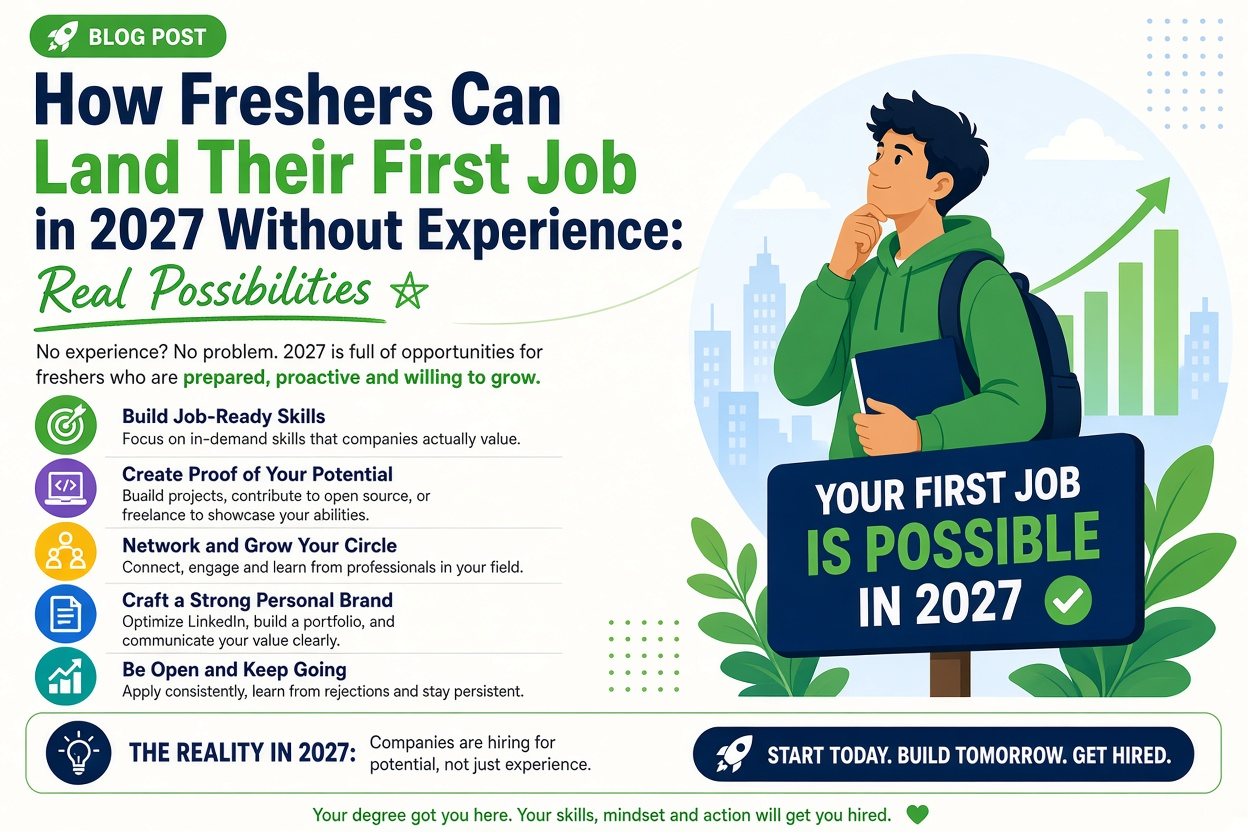
Why Is It So Hard to Land a First Job When Every Listing Asks for Experience?
Almost every fresher meets the same puzzle. You need experience to get a job, and you need a job to get experience. Listings ask for one or two years of work history, and you have just finished your studies. It is easy to read this as a closed door.
Part of the confusion comes from how listings are written. Some requirements are firm, while others describe a wished-for candidate who may not exist. Hiring teams that welcome beginners usually care less about years and more about signs that you can learn quickly, think clearly and communicate well. Those signs can be built and shown without a job.
The pressure is emotional as well as practical. Friends receive offers, relatives ask about plans, and each unanswered application can feel personal. It helps to remember that a first job search is a process with stages, not a single test, and that most people improve a great deal between their first application and their tenth.
A more useful question is this: what could I show an employer today that proves I can do useful work? Answering it turns an anxious wait into a short list of actions you can begin this week.
The gap this creates
Many freshers either send the same resume everywhere and hope, or wait until they feel ready. Closing the gap means building proof of skill, practising how you explain it and making that proof easy for employers to find.
The Short Answer: You Can Land a First Job Without Experience by Replacing Years With Proof
Show proof through projects, practised interviews and a skill score, target roles meant for beginners, and improve a little every week.
A structured AI interview scores technical ability, communication and problem-solving, so employers see evidence of your potential and you see what to improve.
The rest of this guide shows how, step by step, and where requirehire.com fits in.
What Is Actually Making the First Job Search So Stressful?
The experience trap
Listings that ask for experience make beginners feel excluded before they start, even when the role is open to freshers.
Applying everywhere, hearing nothing
Sending many identical applications rarely works. Without feedback, you cannot tell whether the resume, the skills or the interview is the problem.
No practice before the real interview
Many freshers face their first interview with no rehearsal, so nerves hide real ability.
Comparing yourself with others
Social feeds show other people's best news. Comparison drains energy that is better spent on a plan.
Debate this
Is "experience required" a rule or a wish? Should a fresher apply when they meet most, but not all, of the requirements? Where would you draw the line between ambition and overclaiming?
Fix 1: How Do You Turn Projects and Practice Into Proof of Skill?
Begin by listing what you can already prove. Include academic projects, group assignments, presentations, volunteering, club roles and anything you built or organised. Next to each item, write what you did, what problem it solved and what happened as a result.
Then add two or three small projects that match the roles you want. A commerce graduate might prepare a simple budget analysis, a marketing student might plan and write a content calendar, and a technology student might build and document a small tool. What matters is that the work is real, finished and explainable. Write a short summary of the problem, your approach and what you would improve next.
Turn each item into a resume line that shows action and result. Instead of writing that you were responsible for a project, write what you built, how you tested it and who used it. Specific lines are easier for a reader to trust than general praise, and they give an interviewer something to ask about.
Finally, practise explaining each item in two minutes. Employers who meet freshers often ask, "Tell me about something you built." A clear answer shows that your project is yours and that you understand it.
Try this week
Pick your best project and write it in five lines: the problem, your steps, the tools you used, the result and one lesson learned.
Fix 2 and 3: How Do You Prepare to Interview and Get Discovered?
Interview skill is a practice skill. Rehearse common questions aloud, record yourself if you can and listen for filler words, long pauses and vague answers. Keep your answers honest and specific. If you do not know something, say how you would find out.
On requirehire.com, you can warm up with mock interviews and aptitude practice, then take a structured AI interview that evaluates technical ability, communication and problem-solving and produces a skill score. It is a starting point, not a verdict, and it shows what to practise next.
Keep your outreach honest and polite. If you speak to seniors, alumni or family friends in your field, ask for advice about the role rather than for a favour, and thank them for their time. A short, genuine conversation can teach you what the work really involves and which skills to practise next.
Discoverability is the third step. Employers browsing the ranked pool see an anonymised profile, and your contact details are shared only if you approve a request. That means your preparation can be noticed while you keep applying elsewhere.
The combined effect
Real projects, practised answers and a measured score. Together they turn "I have no experience" into "here is what I can do".
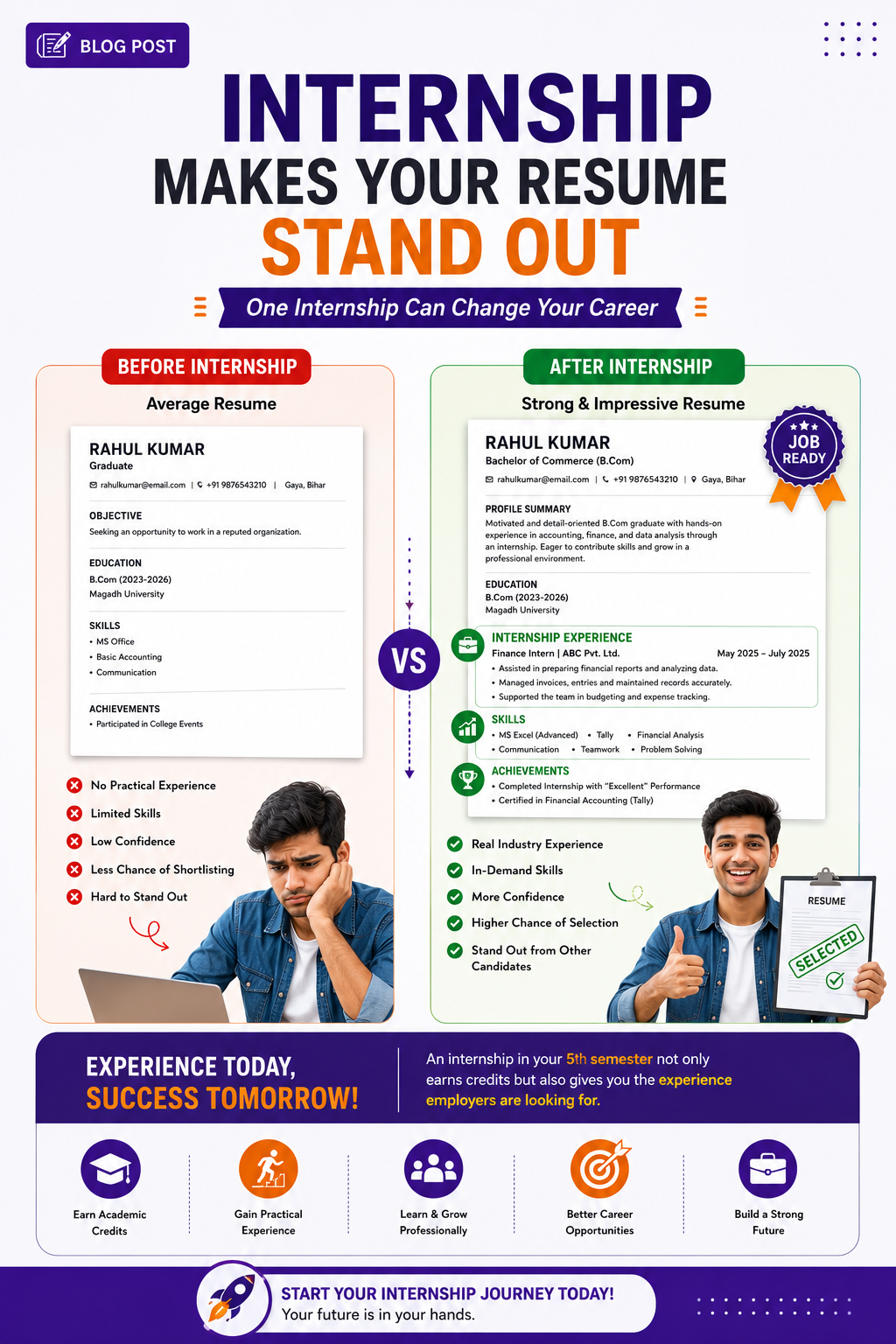
Your First AI Interview Takes Minutes. The Clarity Lasts Much Longer.
Register on requirehire.com, upload your resume and take a structured AI interview to see your baseline skill score today.
to register, and it takes just a few minutes to start.
Take My First AI InterviewWaiting for Experience vs Building Proof Now: Which Gets You Hired Sooner?
Waiting for experience
Some freshers hold back until they feel qualified. The wait feels safe, but months pass without new evidence, and the resume stays thin.
Building proof now
Projects, practice and a first score begin to fill the gap immediately. Each small piece gives you something concrete to talk about.
The honest verdict
Proof grows only when you act. You do not need to feel fully ready to start. What is the smallest piece of proof you could finish this week?
Mass Applying vs Targeted Applying: Which Works Better for Freshers?
Mass applying
Sending one resume to every listing saves effort per application, but responses are often low and you learn little from the silence.
Targeted applying
Choosing roles that fit your skills and adjusting your resume for each one takes longer, but the match is clearer and you can track what works. A skill score helps you see which roles suit your strengths.
The honest verdict
Quality usually beats quantity for beginners. Would you rather send fifty identical applications or ten careful ones, and why?
Stop Guessing What Employers See. Get Your Strengths Scored.
A structured AI interview evaluates technical ability, communication and problem-solving, so you know what to practise next.
See How Scoring Works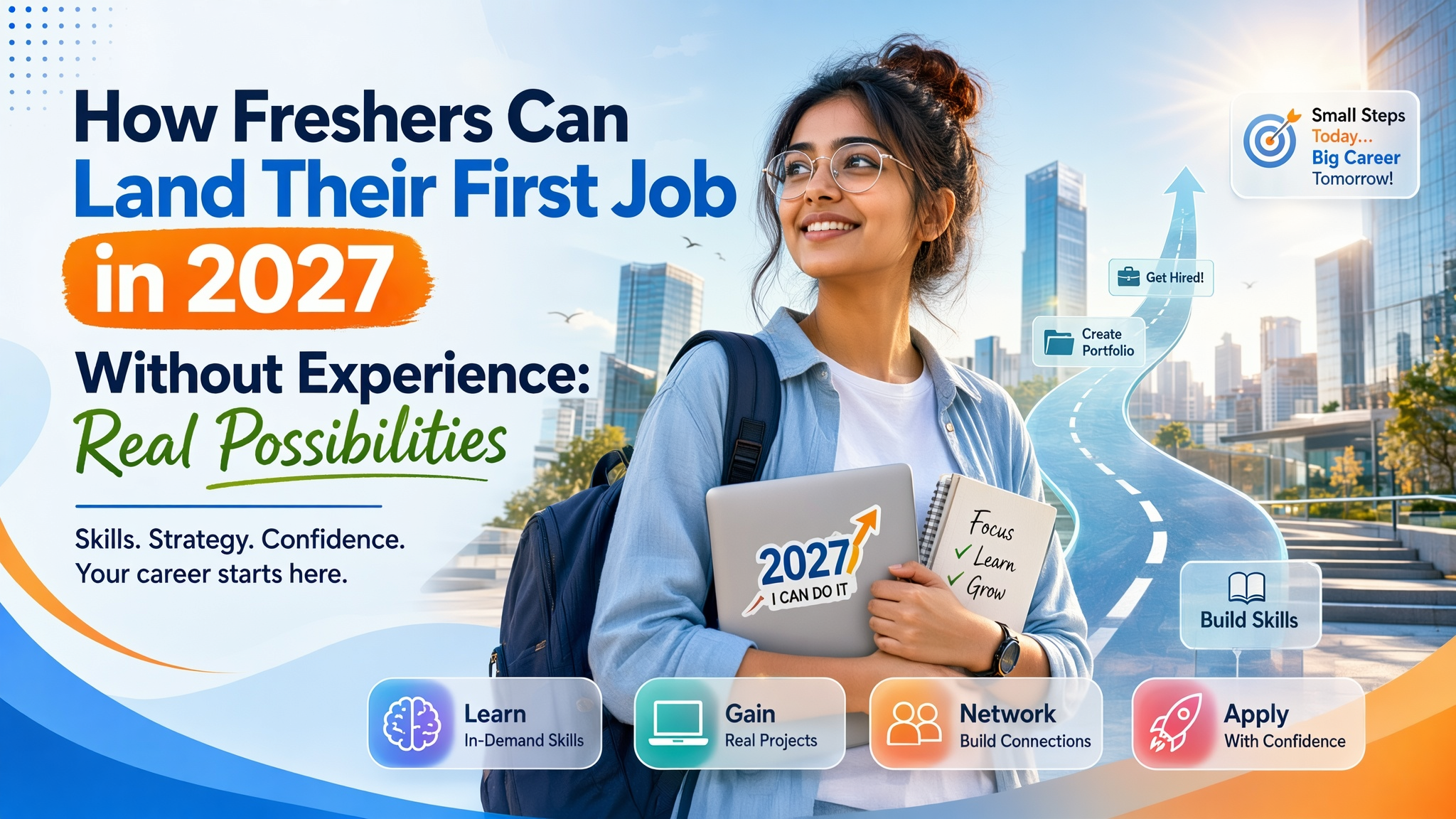
Memorised Answers vs Practised Reasoning: Which Wins the Interview?
Memorised answers
Learned scripts can sound smooth, but they fall apart when the interviewer changes the question or asks a follow-up.
Practised reasoning
Explaining how you think, step by step, works for any question. Practice is self-paced on requirehire.com, so there is nothing to book.
The honest verdict
Prepare examples, not scripts. Should interviews reward polished delivery or honest thinking? People disagree, so be ready for both.
An Invisible Profile vs a Skill-Scored Profile: Which Gets Noticed?
Invisible profile
A resume that sits in one inbox is seen by one reader. If that reader is busy, your effort stays hidden.
Skill-scored profile
A profile that employers browsing a ranked pool can find, with contact details shared only after you approve.
The honest verdict
Being visible and being protected can go together. Would you trust a score more than a claim on a resume, or the other way round?
Four Questions to Check Whether You Are Ready to Apply
Can I explain two projects or experiences clearly in two minutes each?
Can I answer common questions for my target role without reading from notes?
Does my resume show my skills with evidence rather than adjectives?
Do I know my strongest and weakest areas from practice or a skill score?
What RequireHire Gives You to Prove Your Potential
Structured AI interview scoring: your answers are evaluated for technical ability, communication and problem-solving, so you can see exactly where to improve.
Mock interviews and aptitude practice: rehearse answering questions aloud and test your reasoning, without a separate cost.
One-time profile and resume check: build your profile from a single resume upload, then use the resume check to present your education, skills and projects clearly.
A visible, skill-scored profile: employers browsing a ranked pool can discover you, even if you have no work history yet.
Consent-based privacy: employers see an anonymised profile, and your contact details are shared only after you approve.
Prepare Today. Be Discoverable Tomorrow.
Employers browse ranked candidate pools on requirehire.com. Your skill-scored profile can be there, with contact details shared only after you approve.
Register on RequireHire
Which Mistakes Do Freshers Make While Looking for a First Job?
Waiting for the perfect moment
Readiness is built by doing. Start with what you have and improve it weekly.
Sending a generic resume
A resume that lists duties but no results is hard to remember. Show what you made and what changed.
Skipping interview practice
Knowing the answer and saying it clearly are different skills. Rehearse aloud.
Treating a rejection or a score as a verdict
One rejection or one low score is information, not a judgement of you. Use it to choose what to practise next, and ignore anyone who promises guaranteed jobs.
The "No Experience Means No Chance" Myth
It is a common belief: without work history, you cannot compete. The worry is understandable, because experience is the easiest thing for a listing to ask for.
What this misses
Employers who hire freshers know that beginners have no long record. They look for learning speed, clear thinking, honest communication and evidence of effort. Projects, practice and a skill score speak to exactly those things. This does not make every role open to a beginner, so read requirements carefully and choose suitable ones. Hiring and selection decisions always belong to the organisations that make them.
Consider what a hiring team actually risks when it takes on a beginner: time spent training and the chance that the person will not settle in. Anything you can show that lowers that risk helps, whether it is a finished project, a clear explanation, steady practice or a score that reflects your reasoning. Is it fair to judge a beginner on potential instead of history? Employers and candidates often disagree, and your own view will shape how you present yourself.
What Actually Changes When You Search With Proof Instead of Hope?
Imagine two graduates from the same college. One sends many applications with a generic resume and waits. The other finishes two projects, rehearses interviews weekly, checks a skill score and applies to a smaller set of suitable roles. After a few months, the second graduate has more to talk about, more confidence and a clearer sense of what to improve. Neither has a guarantee, but one is clearly better prepared.
Proof also changes how interviews feel. When you can describe something you built and point to a score that supports your claim, you are no longer asking the employer to take a chance on your word. Steady effort also protects your confidence. Each finished project, practised answer and retested score is a small win you can point to on a difficult week, which makes it easier to keep going until the right opportunity arrives. Which would you rather bring to an interview?
The shift, in plain terms
Before: scattered applications, silence and no feedback. After: real projects, practised answers, a baseline skill score and a profile that employers can find. None of this promises a job. It gives you a steadier way to search and the means to improve with every attempt.
What Does a Job-Ready Fresher Profile Look Like?
Two or three finished projects, each explained in a few clear lines.
Practised answers, including a short introduction and a project story.
A baseline skill score, so you know your starting point and your next focus.
A current resume and profile, so opportunities find you prepared.
Your Starting Point, by Situation
Final-year student
Start projects now, take a baseline AI interview early and practise weekly so you graduate prepared.
Recent graduate
Finish one strong project, fix your resume with the resume check and apply in small, focused batches.
Non-technical background
List transferable skills such as communication, organisation and analysis, then support them with a project and aptitude practice.
Searching for several months
Review what has not worked, retest your skill score, rehearse aloud and change one thing at a time.
Your First Job Readiness Score
Tick everything that is true for you right now, then calculate your score.
This Guide, in Numbers
Your Potential Deserves a Clearer Starting Point
Register once on requirehire.com to see how AI interviews and skill scoring work for your own profile.
Turning This Into a Plan: Before, During, After
Do: Finish a project and take a baseline interview
Proof and a starting score give you something real to share.
Don't: Wait until you feel perfect
Readiness grows through action, not waiting.
Do: Track applications and practise aloud
Notes show what is working, and spoken practice builds clarity.
Don't: Send the same resume everywhere
Adjust your resume to the role so the match is clear.
Do: Write down what went well and what to improve
Every interview is practice for the next one. Retest your score to see progress.
Don't: Treat one outcome as final
Rejection is information. Improve one thing and try again.
Your Final Checklist
You have listed your projects and skills, each with a result.
You can explain at least one project clearly in two minutes.
You have a baseline skill score and know your strongest and weakest areas.
Your resume and profile are current, so employers can find you prepared.
You know exactly how your contact details are shared with employers.
10 Questions Freshers Actually Ask About Getting a First Job

First Jobs Are Rarely Luck. They Are Built, One Piece of Proof at a Time.
You now have a plan: list what you can prove, build small projects, practise aloud, get a skill score and apply with focus. Register on requirehire.com, take your first AI interview and start turning your potential into visible proof. It takes only a few minutes to begin.
100% for job seekers, always.
Ready to Practice What You Learned?
Take a free AI mock interview and get your skill score in 15 minutes. 100% free for all candidates.
Related Posts
Practice Your Interview
Get ready for your next interview with our AI-powered mock interview tool.
Start Practice Interview